

Healthcare Activos hires former Quironsalud manager to head hospital strategy
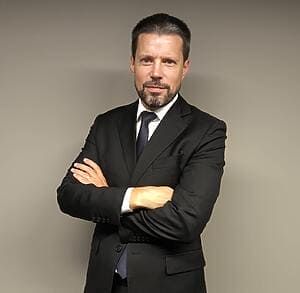 Activos is particularly keen on assets operated by the major Spanish and Portuguese groups, such as Quironsalud, Luz Saude and Lusiadas Saude. A logical move was therefore to hire Albert Martínez Bigas, who held senior roles at Quironsalud for 12 years, as Hospitals Director, to run the hospital investment vehicle. In a conversation with HBI, Bigas explained what he will bring to the table as a former operator, as Activos executes its hospital investment strategy.
HBI: What convinced you to move from the operator side to the investor side after more than a decade at Quirónsalud?
Bigas: It was a combination of finding a project whose vision and ambition I genuinely share, along with the professionalism of the team leading Healthcare
Activos. Throughout my career I have worked with various healthcare-focused real estate investors. Healthcare Activos always stood out because conversations were never limited to a specific contract or transaction. They always went beyond that. Albert Martínez Bigas, Hospitals Director, Healthcare Activos We discussed the market, its evolution, industry trends, the positioning of key players, and the opportunities and challenges the sector is likely to face over the next decade. Moreover, I believe we share the same long-term conviction: Europe will require more private healthcare capacity, greater investment, and better infrastructure to meet the demographic challenges of the coming decades. Being able to contribute to that development through a platform with European ambitions was an opportunity that was simply too compelling to pass up.
HBI: What will your role be within the new hospital investment vehicle?
Bigas: My responsibility will be to help build a European hospital platform capable of supporting the sector’s growth and transformation over the coming decades, combining both the operator’s and the investor’s perspectives. Europe will require significantly more healthcare capacity in the coming decades in a significantly transforming landscape. Population ageing, increasing healthcare demand, and a more technological and specialised model of medicine will require substantial investment both in new capacity and in the modernisation of existing hospitals. At Healthcare Activos, we aim to be a long-term partner to private healthcare operators, while also playing a meaningful role in developing new healthcare infrastructure where it is needed. My role will be to bring a perspective that is closely connected to the operational realities of hospitals, helping identify investment opportunities and ensuring that assets remain competitive and relevant twenty or thirty years from now.
HBI: What fundamentals will Healthcare Activos focus on in this strategy?
Bigas: Healthcare Activos’ investment strategy is very clear, and the fundamentals remain the same for the hospital vertical: selected high-quality assets, leased to the main European operators, with long-term triple net contracts and fixed rents indexed to inflation. From an operational perspective, attractiveness of a specific hospital opportunity will rely on the following: First: best-in-class operators. Organisations capable of attracting medical talent, delivering high-quality care, innovating, and, above all, adapting to changes within the sector. Second: markets and locations with clear unmet demand for private hospital capacity and strong accessibility for both patients and healthcare professionals. Third: adaptable assets. Medicine is already evolving faster than much of the infrastructure that supports it. Therefore, we seek assets capable of adapting over the coming decades to new models of care, new technologies and rising patient expectations. Fourth: investment discipline. The hospital sector offers extraordinary opportunities, but precisely because of that, it is essential to maintain a long-term perspective and select investments where sustainable value creation exists for all stakeholders. Our objective is not to invest in just any hospital. It is to contribute to the development of healthcare capacity that remains relevant for decades to come.
HBI: What does someone who has spent more than a decade working within hospitals bring?
Bigas: Above all, the ability to understand the long term trends and business fundamentals in a very complex sector, and how decisions are actually made within healthcare organisations. The hospital sector is extraordinarily complex. Each country has different funding models, competitive dynamics and highly specific local realities. Furthermore, hospital groups do not manage individual hospitals in isolation but increasingly integrated healthcare networks. During my time at Quirónsalud, I had the opportunity to participate in the development and transformation of numerous hospital projects, including both greenfield developments and the expansion and modernisation of existing assets. This experience provides a better understanding of management priorities, operational challenges and the real needs of healthcare operators when pursuing growth. Healthcare Activos’ positioning and track record is to provide conservative longterm inflation linked returns with significant downside protection, and this is delivered through its unique operating knowledge that guarantees the long term performance of the operators. My role is to make sure that this happens in the hospital sector.
HBI: What mistakes do hospitals typically make when selling their real estate?
Bigas: The main mistake is to assess the transaction solely from a financial perspective. A sale-and-leaseback can be an excellent tool to finance growth, modernisation or new projects. However, the objective should not be to maximise today’s valuation, but rather to ensure that the resulting structure allows the hospital to continue investing and growing in the future. Hospitals require constant investment in technology, digitalisation, equipment and clinical innovation. If a real estate transaction compromises that future investment capacity, it is probably not structured appropriately. We perceive a sale-and-lease back as a true long term joint venture with the operator, and we hope to bring value beyond the pure financial transaction.
HBI: How should necessary investments be approached when a hospital requires structural upgrades to incorporate new technology?
Bigas: The first question should always be whether the investment improves the hospital’s ability to treat patients and deliver better clinical outcomes. More than two-thirds of European hospitals are over thirty years old and were designed for a very different model of healthcare delivery. Yet thanks to advances in medicine and technology, we are now able to treat more patients within the same infrastructure, through less invasive, more precise, and more personalised procedures. The challenge is to adapt these hospitals so that they can continue increasing their productivity and clinical capacity without compromising quality of care or patient experience. Investments that enable the implementation of new technologies, optimise clinical pathways, or enhance the patient experience generally create value for both operators and property owners. However, it is not easy in existing older facilities, and this is why we have a distinct experience and focus on greenfields, replacements and structural expansions.
HBI: What will the hospitals of the future look like?
Bigas: Hospitals will be more digital, more connected, and designed for a healthcare model that is increasingly precise, personalised and technology driven. We will also see patients becoming far more involved in managing their own health, supported by care models that accompany them both inside and outside the hospital. Hospitals will need to treat significantly more patients than they do today. This is not a hypothesis. It is the logical consequence of demographic evolution and the continuous rise in healthcare demand. The real challenge for the coming years will be to increase hospitals’ capacity to resolve patients’ healthcare needs while maintaining clinical safety, operational efficiency and the differentiated experience patients expect. This will require a different approach to infrastructure design. We will see more independent clinical pathways, areas capable of operating autonomously with their own treatment capabilities, and greater segmentation of space to manage growing patient volumes efficiently. Hospitals will also cease to be viewed as standalone buildings and instead become part of integrated healthcare networks, where different facilities work in coordination to meet patients’ needs according to their level of complexity. And let me insist again, all the above is not easy to execute within the too-large, old and obsolete current infrastructure that we see in markets like the UK or Italy.
HBI: What impact does the shift from inpatient to outpatient care have?
Bigas: It has been one of the most important transformations in modern healthcare because it has enabled many more patients to be treated using the same infrastructure. This has allowed hospitals to treat more patients, reduce lengths of stay and make far more efficient use of resources. For more than a decade I have seen private hospitals operating close to full capacity, but with one important difference: today they can diagnose and treat almost twice as many patients as they could ten years ago, thanks to advances in medicine and technology. Perhaps even more importantly, this transformation is forcing a rethink of many hospitals that were designed thirty or forty years ago for a very different healthcare model. The challenge today is not simply to have more capacity, but to organise that capacity differently. Ultimately, the growth of outpatient activity does not reduce the importance of hospitals. Rather, it creates an opportunity to redesign them and make them more productive, efficient and better prepared to meet growing demand. And again, it is very difficult to redesign old infrastructure and that is why we focus on greenfields, which will be fundamental for the growth of the sector in the coming decades.
