

Healthcare Activos: Sustainable Healthcare Assets for the Long Term
How European real estate investors and care operators can build profitably and sustainably — interview with Alberto Fernandez, Healthcare Activos
This interview is featured as one of several case studies in HBI’s 2026 Healthcare Property Special Report, which will soon be published.
Healthcare Activos is a Spanish specialist healthcare REIT investing in nursing homes, hospitals, mental health clinics and rehabilitation centres across Europe. The company currently manages 84 assets with a total value exceeding €1.3 billion.
Healthcare Activos has two distinguishing characteristics that set it apart from other major healthcare real estate investors in Europe. First, it focuses on acquiring individual assets rather than portfolios, selecting each property on a case-by-case basis based on its fundamentals, including catchment area, design, effort rate, operator quality and lease structure. Second, and closely related, the company has a strong focus on new developments, which it designs in-house.
According to Alberto Fernández, 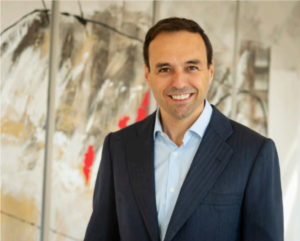 Co-CEO, Healthcare Activos is currently the only real estate investor delivering healthcare new builds at scale across Europe. Over the past year, the company completed seven developments and signed five new projects across Ireland, France, Italy and Spain. Further projects are planned for 2026 and 2027 in France, Germany, Italy, Spain, Portugal and Ireland.“Greenfields are the best type of asset we can own long term,” Fernández explains. “First, we select the right catchment area. Then we design the building, tailored specifically to that location, which is fundamental. Finally, we identify the right operator. If an operator does not have the capabilities, experience or long-term vision required for that specific service in that specific catchment area, then it is the wrong operator for the asset.”
Selecting the right catchment area is critical, as only assets built in suitable locations can be profitable over the long term. Fernández highlights Germany as an example where supply-driven development led to care homes being built in inappropriate locations, resulting in low occupancy, suppressed pricing and ultimately unsustainable effort rates. “With a good location, a good design and the right operator, assets will fill sooner or later at the right pricing,” he says.
Healthcare Activos goes a step further by developing its own theoretical business plan for the future operator, based on the catchment area, building design, local market dynamics and regulatory framework. This ensures that the project is sufficiently profitable and capable of sustaining a rent level of approximately 50% of EBITDAR. “Yield is not what matters,” Fernández notes. “What matters is the operator’s fundamentals and the sustainability of the rent. Effort rate is probably the most important KPI for long-term operational sustainability, while also ensuring the asset remains in optimal condition and delivers conservative, inflation-linked returns.”
The construction phase presents challenges for many European investors, particularly in the context of recent cost inflation. Fernández believes this is often due to short-term thinking and insufficiently developed projects. Despite these market conditions, Healthcare Activos completed all seven buildings delivered in 2025 within 1.5% of their original budgets, a result Fernández describes as unprecedented.
He attributes this performance to the company’s operator-led mindset. Many members of the management team are former operators, and collectively they have been involved in the delivery of more than 150 healthcare buildings over the past 25 years. This experie
nce enables the team to design assets with operational efficiency in mind and to respond flexibly during construction, adapting materials when necessary without compromising quality.
A central pillar of Healthcare Activos’ design philosophy is its sectorisation concept, whereby buildings are organised into independent units of 15 to 20 rooms, each catering to different care needs. This approach enhances long-term asset sustainability, improves quality of care and provides operators with flexibility to adapt to future demand. Different medical specialties such as mental health, palliative care, post-acute care and neurorehabilitation can coexist within the same building through independent sectors. These higher-acuity solutions deliver improved outcomes for residents at a cost up to 75% lower than traditional acute care beds for payors.
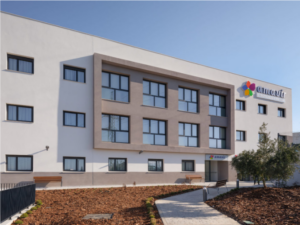
Material selection is also a key consideration. Fernández notes that long operational experience allows the company to invest capital where it truly adds value. In a recent greenfield project in Italy, Healthcare Activos reduced the original €24 million budget to €17 million while simultaneously improving the building’s design, enhancing operator profitability and ultimately improving patient care.
Fernández concludes that this long-term, hands-on approach explains why Healthcare Activos is currently engaging with leading European operators on multiple new development opportunities. Looking ahead, he believes that greenfield developments are essential to address Europe’s demographic challenge. He estimates that 1.6 million new care beds will be required over the next 10 to 15 years, representing investment needs exceeding €200 billion. “We need to ensure that new buildings are sustainable from a cost perspective while delivering superior care,” he says. “It’s not about spending more, because our governments won’t be able to afford it. It’s about spending better.”
